Pregnancy is one of the highest-risk periods in a woman’s life for developing deep vein thrombosis (DVT) – a blood clot that forms in a deep vein, most commonly in the leg. While swelling, heaviness, and moderate discomfort are normal and mostly innocuous in pregnancy, DVT is a separate medical problem that demands immediate detection. Left untreated, a clot can spread to the lungs and produce a pulmonary embolism, a life-threatening emergency. Understanding what causes DVT during pregnancy, how to detect its signs, and how to prevent it can make the difference between a tolerable illness and a medical disaster.
DVT During Pregnancy: Causes, Symptoms, and Prevention
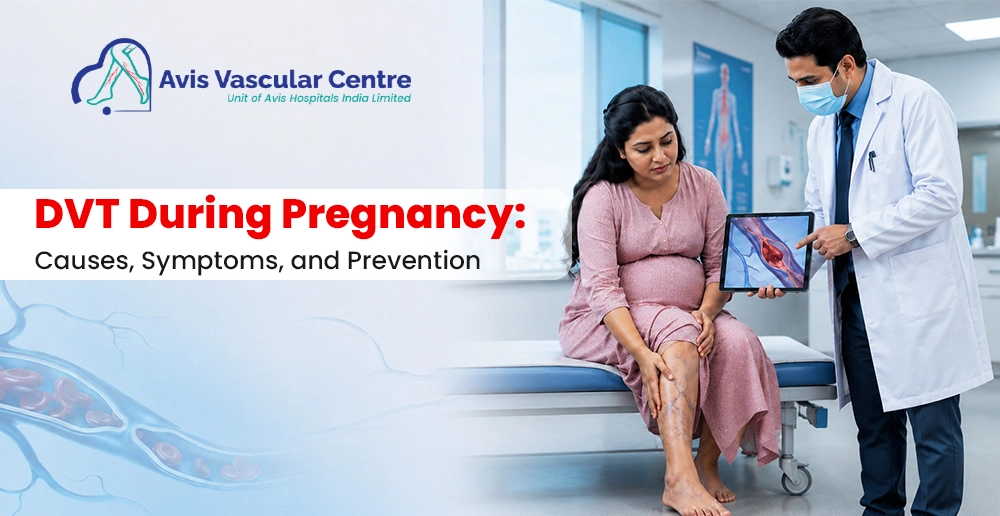
What Is Deep Vein Thrombosis (DVT)?
A blood clot in one of the body's deep veins, usually in the thigh or calf, causes DVT. DVT during pregnancy and the weeks following delivery is a recognized area of clinical concern rather than a rare issue because many natural changes in the body increase the likelihood of clot development during pregnancy.
Does pregnancy cause DVT?
Pregnancy creates a combination of factors that raise clotting risk, often referred to as Virchow’s triad - slowed blood flow, increased clotting tendency, and vessel wall changes:
• Hormonal changes: As oestrogen and progesterone levels rise, the blood's innate propensity to clot-a defence against bleeding during childbirth - also increases the risk of DVT.
• Decreased venous return: As the uterus grows, it puts pressure on the inferior vena cava and pelvic veins, which slows the return of blood from the legs.
• Increased blood volume: Pregnancy can result in a 50% increase in total blood volume, which puts more strain on the venous system.
• Decreased mobility: During pregnancy, bed rest, long-distance travel, or a sedentary lifestyle weaken the calf muscular pump, which normally keeps blood flowing.
• Pre-existing risk factors: Previous DVT, obesity, smoking, varicose veins, a family history of thrombosis, or a history of clotting problems all increase the risk.
• Caesarean delivery and the postpartum period: Because of decreased mobility and vessel damage, there is an increased risk of clots during surgical delivery and the first six weeks following delivery.
DVT Symptoms in Pregnancy
DVT symptoms can be subtle and are easily mistaken for ordinary pregnancy discomfort, which is why awareness matters. Watch for:
• Swelling in one leg noticeably more than the other
• Chronic calf pain or tenderness, frequently characterized as a cramp
• Warmth across the leg's afflicted area
• The skin's redness or bluish discoloration
• A painful, heavy feeling that gets worse as you stand or walk
• In extreme situations, abrupt dyspnea or chest pain may be a sign that the clot has reached the lungs; this calls for immediate medical attention.
DVT vs. Normal Pregnancy Swelling
Because swollen legs are so common in pregnancy, it helps to know what sets DVT apart:
| Feature | Normal Pregnancy Swelling | DVT-Related Swelling |
|---|---|---|
| Which leg | Usually both legs | Usually one leg only |
| Onset | Gradual, worsens through the day | Can appear suddenly, over hours |
| Pain | Mild heaviness or achiness | Deep, cramp-like pain, often in the calf |
| Skin | Normal colour, may feel tight | Warm, red or bluish discolouration |
| Relief | Improves with rest and leg elevation | Little to no relief with rest |
| Action needed | Monitor, compression stockings | Same-day Doppler scan and medical review |
DVT Prevention in Pregnancy
Most cases of pregnancy-related DVT can be prevented or caught early with a few consistent habits:
• Stay active: Ankle-pumping exercises and quick, frequent walks help to keep blood flowing, particularly when sitting for extended periods of time or traveling.
• Wear compression stockings: During the second and third trimesters, graduated compression stockings are particularly helpful in promoting venous return.
• Maintain a healthy blood viscosity by drinking enough water.
• Prevent prolonged immobility: When traveling by automobile or airplane, switch positions every 30 to 60 minutes and refrain from crossing your legs for extended periods of time.
• Raise the legs: For brief periods of time, resting with the legs elevated above the level of the heart minimizes venous pooling.
• Talk about risk factors early: Women should talk to their obstetrician about prophylactic blood thinners if they have a personal or family history of clotting issues.
• Pay attention to one-sided symptoms: Any asymmetric leg discomfort or swelling should be evaluated by a doctor right away rather than being ignored.
DVT Treatment During Pregnancy
The first-line diagnostic technique for suspected DVT is a Doppler ultrasound. This is a safe, painless, and radiation-free procedure, making it appropriate for use during pregnancy. Low-molecular-weight heparin injections, which are thought to be safe during pregnancy are typically used as treatment after confirmation. Treatment usually includes compression stockings, mobility monitoring, and routine follow-up scans. In order to balance clot protection with the danger of bleeding during labor, an obstetrician and a vascular specialist always collaborate on treatment decisions.
Conclusion
When detected early, DVT during pregnancy is a manageable condition, and timely detection is greatly aided by professional vascular treatment. To guarantee that any clotting risk is recognized and properly controlled during pregnancy and the postpartum period, Avis Vascular Center provides sophisticated Doppler tests, skilled vascular specialists, and coordinated treatment with your obstetrician. Avis Vascular Centre is dedicated to safeguarding the vein health of expectant moms at every stage- from precise, radiation-free scans to individualized prevention strategies and prompt treatment- giving you the assurance that comes with expert care nearby.
Frequently Asked
Questions
For any unanswered questions, reach out to our support team via email. We’ll respond as soon as possible to assist you.